
The Best Poetry on Sadness: Finding Beauty in the Depths of Grief
Sad poems are a powerful and universal way to capture and explore the nuances of sadness. Poetry on sadness exists for exactly that moment. Poets, both classic and contemporary, have crafted verses that help us process grief, connect with others through shared experiences, and find beauty in even the most difficult moments. Whether you’re reading someone else’s words or writing your own, poetry has a unique way of offering solace and understanding.
Exploring Sadness through Sad Poems
Sadness poems allow us to untangle the complexities of sadness, reflecting the emotions we sometimes struggle to articulate ourselves. The best poems on sadness don’t offer simple resolutions but instead strive to understand. They invite readers into an intimate space where grief is acknowledged and shared.
By both reading and writing poetry, we can explore our humanness, confront our pain, and connect with a universal experience. This connection can bring comfort and insight into the depths of grief.
Why We Turn to Sad Poetry: Naming Grief, Depression, and Darkness
Sadness resists truth told in plain language. Depression and despair rarely arrive with a clear explanation attached, and everyday words often fail to describe what a person is carrying. Poetry gives that weight somewhere to go.
A short verse can speak for feelings that stay stuck for weeks, turning private hurt and anguish into something shaped and shareable. Where ordinary conversation avoids darkness, poetry walks directly into it, naming the dead hours, the tired mornings, and the parts of grief people rarely say aloud.
- It gives shape to what feels formless: Naming a deep, wordless ache in even one line makes it easier to carry.
- It validates rather than fixes: Good sad poetry does not rush past pain; it lets the reader sit inside a dark feeling without judgment.
- It rewards a closer look: Readers often discover new meaning in the same short verse each time they return to it, since grief itself keeps changing shape over time.
Even when a poem cannot lift the weight from someone’s head, it can make that weight feel less isolating.
A Contribution of Sadness, Beauty & Connection (Contemporary Poems)
Here are two-line poems on sadness, each exploring the beauty and depth of grief. Experiencing a sad feeling is a natural part of being human, and these poems encourage readers to acknowledge and process their emotions. They are presented below in English, Roman Urdu, and Urdu:
Broken Heart
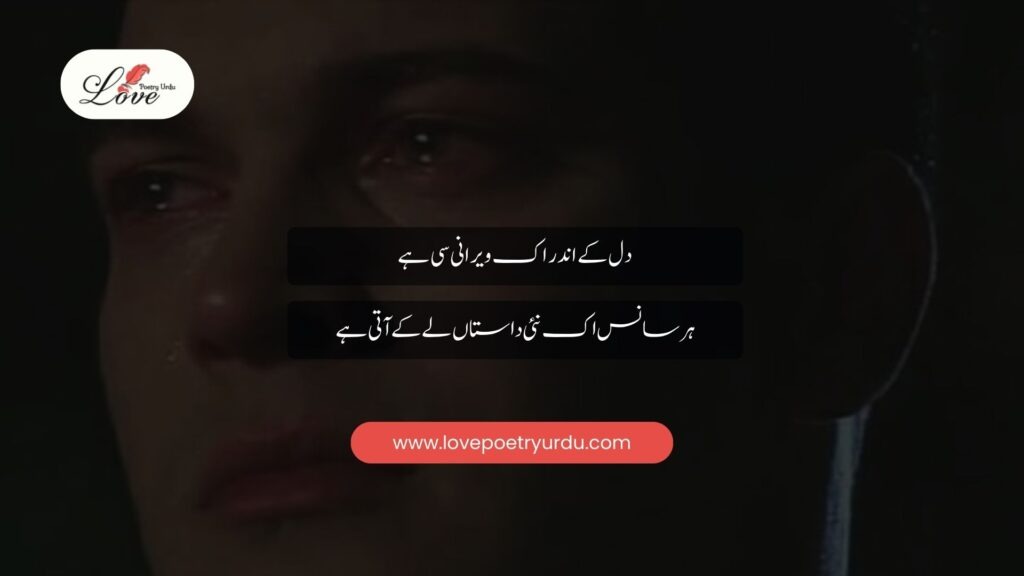
دل کے اندر اک ویرانی سی ہے
ہر سانس اک نئی داستاں لے کے آتی ہے
Roman Urdu:
Dil ke andar ek virani si hai
Har saans ek nayi dastaan le ke aati hai
English:
There is a desolation inside my heart,
Every breath brings a new tale of pain.
غم کی راتوں میں ستارے بھی رو پڑے
یہ دل کا دکھ کبھی کم ہونے والا نہیں
Roman Urdu:
Gham ki raaton mein sitare bhi ro parhe
Yeh dil ka dukh kabhi kam hone wala nahi
English:
Even the stars wept during nights of sorrow,
This heartache will never lessen.

دل کے زخم ہیں کبھی مندمل نہ ہونے والے
ہر یاد اک نیا طوفان لے کے آتی ہے
Roman Urdu:
Dil ke zakhm hain kabhi mundamil nah hone wale
Har yaad ek naya toofan le ke aati hai
English:
The wounds of the heart will never heal,
Every memory brings a new storm.
غم کی چھاؤں میں زندگی گزر رہی ہے
اب تو خوشی بھی مجھ سے دور ہو گئی ہے
Roman Urdu:
Gham ki chhaon mein zindagi guzar rahi hai
Ab to khushi bhi mujh se door ho gayi hai
English:
Life passes under the shadow of sorrow,
Now even happiness has left me.
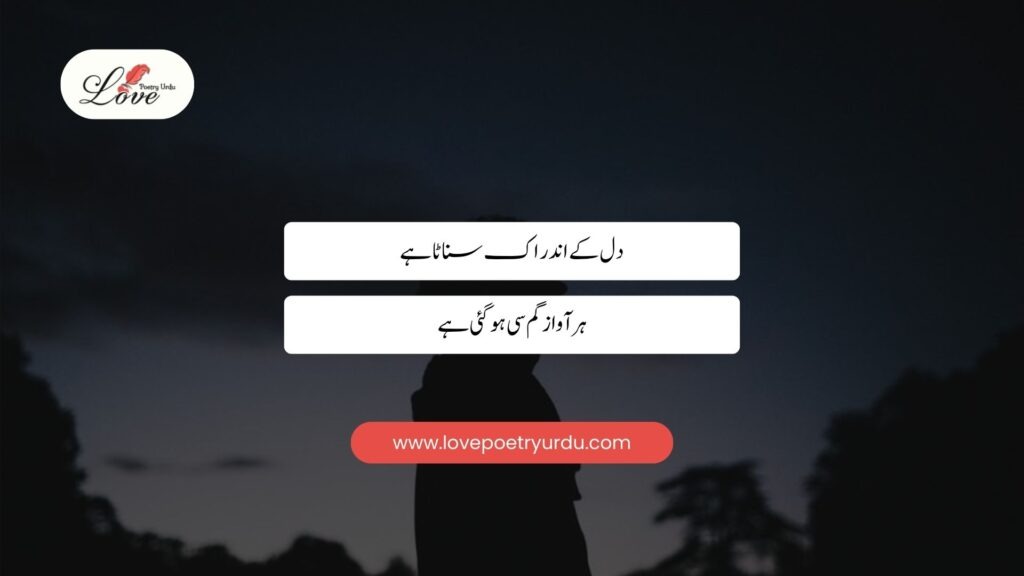
دل کے اندر اک سناٹا ہے
ہر آواز گم سی ہو گئی ہے
Roman Urdu:
Dil ke andar ek sunata hai
Har awaz gum si ho gayi hai
English:
There is a silence inside my heart,
Every sound seems lost.
غم کی بارش میں بھیگ گیا ہوں
اب تو آنسو بھی خشک ہو گئے ہیں
Roman Urdu:
Gham ki barish mein bheeg gaya hoon
Ab to ansu bhi khushk ho gaye hain
English:
I am drenched in the rain of sorrow,
Now even my tears have dried up.
دل کے اندر اک جنگ جاری ہے
ہر لمحہ اک نیا زخم لگتا ہے
Roman Urdu:
Dil ke andar ek jung jari hai
Har lamha ek naya zakhm lagta hai
English:
A war rages inside my heart,
Every moment a new wound is inflicted.
غم کی دنیا میں تنہا رہ گیا ہوں
اب تو خواب بھی مجھے چھوڑ گئے ہیں
Roman Urdu:
Gham ki duniya mein tanha reh gaya hoon
Ab to khwab bhi mujhe chhod gaye hain
English:
I am left alone in the world of sorrow,
Now even dreams have abandoned me.
دل کے زخم ہیں پرانے، مگر تازہ ہیں
ہر یاد تازہ درد بن کر آتی ہے
Roman Urdu:
Dil ke zakhm hain purane, magar taza hain
Har yaad taza dard ban kar aati hai
English:
The wounds of the heart are old, yet they feel fresh,
Every memory arrives as a new pain.
غم کی گھٹا چھائی ہوئی ہے
اب تو روشنی بھی دور ہو گئی ہے
Roman Urdu:
Gham ki ghata chhai hui hai
Ab to roshni bhi door ho gayi hai
English:
The cloud of sorrow has overshadowed me,
Now even light seems far away.
دل کی دھڑکنوں میں درد سما گیا ہے
اب تو زندگی بھی بوجھ لگتی ہے
Roman Urdu:
Dil ki dhadkanon mein dard sama gaya hai
Ab to zindagi bhi bojh lagti hai
English:
Pain has settled in the beats of my heart,
Now even life feels like a burden.
غم کی ریت پر چلتے چلتے
پاؤں بھی زخمی ہو گئے ہیں
Roman Urdu:
Gham ki ret par chalte chalte
Paon bhi zakhmi ho gaye hain
English:
Walking on the sands of sorrow,
Even my feet have become wounded.
دل کے اندر اک طوفان ہے
ہر لمحہ اک نیا درد اٹھتا ہے
Roman Urdu:
Dil ke andar ek toofan hai
Har lamha ek naya dard uthta hai
English:
There is a storm inside my heart,
Every moment a new pain arises.
غم کی چادر اوڑھ کر بیٹھا ہوں
اب تو خوشی بھی مجھ سے دور ہو گئی ہے
Roman Urdu:
Gham ki chadar odh kar baitha hoon
Ab to khushi bhi mujh se door ho gayi hai
English:
I sit wrapped in a shroud of sorrow,
Now even happiness has left me.
دل کے اندر اک خلا سا ہو گیا ہے
ہر چیز ادھوری سی لگتی ہے
Roman Urdu:
Dil ke andar ek khala sa ho gaya hai
Har cheez adhoori si lagti hai
English:
A void has formed inside my heart,
Everything feels incomplete.
غم کی دنیا میں گم ہو گیا ہوں
اب تو خواب بھی مجھے چھوڑ گئے ہیں
Roman Urdu:
Gham ki duniya mein gum ho gaya hoon
Ab to khwab bhi mujhe chhod gaye hain
English:
I am lost in the world of sorrow,
Now even dreams have left me.
دل کے زخم ہیں کبھی بھرنے والے نہیں
ہر سانس درد بن کر گزرتی ہے
Roman Urdu:
Dil ke zakhm hain kabhi bharnay walay nahi
Har saans dard ban kar guzarti hai
English:
The wounds of the heart will never heal,
Every breath passes as pain.
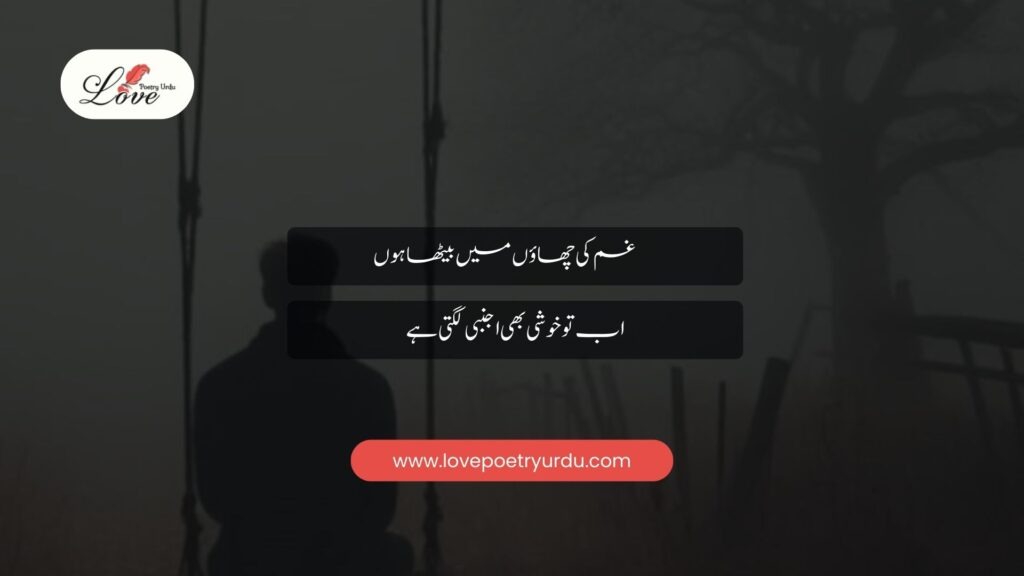
غم کی چھاؤں میں بیٹھا ہوں
اب تو خوشی بھی اجنبی لگتی ہے
Roman Urdu:
Gham ki chhaon mein baitha hoon
Ab to khushi bhi ajnabi lagti hai
English:
I sit in the shadow of sorrow,
Now even happiness feels like a stranger.
Common Themes in Sadness Poetry: Family, the Body, and Everyday Moments
Grief rarely stays abstract for long. It settles into specific places: a mother’s empty chair, a family gathering with one seat unfilled, the weight of loss sitting on someone’s shoulders. Poetry on sadness works because it grounds big emotion in small, physical detail.
The body often carries grief before language catches up. A person can feel buried under exhaustion without knowing why, notice themselves lying awake long past bedtime, or realize that sleep no longer comes easily. Even the morning can feel heavier than the day that follows it, as if grief resets overnight rather than fading.
- Admitting fear takes honesty: Being scared of forgetting a person’s voice or face is a common, rarely spoken fear that poetry gives permission to name.
- Naming it takes courage: It takes real strength to be brave enough to put private pain into words other people will read.
- Love does not disappear with loss: Even when someone has died, the love connecting two people continues to shape the person left behind, which is why so much sad poetry is really love poetry in disguise.
Conclusion
Poetry on sadness does not erase grief, and it was never meant to. What it offers instead is companionship: proof that someone else has stood exactly where you are standing now, and found a way to keep living, keep writing, and keep hope alive alongside the pain.
Whether you are reading these verses for comfort or trying to write your own, poetry remains one of the most honest bridges between sorrow and healing. If any of these lines resonated, share them with someone who needs them, or try writing your own; poetry does not just reflect what you feel, it puts words to what matters most.