
(Armaghan-e-Hijaz-Farsi-34) Huzoor-e-Millat 8: Ae Farzand-e-Sehra اے فرزند صحرا
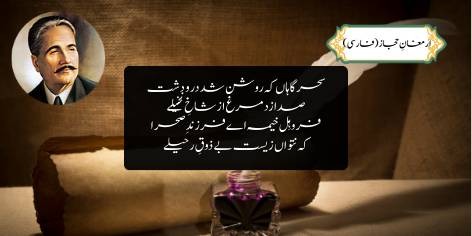
سحر گاہاں کہ روشن شد در و دشت
صدا زد مرغ از شاخِ نخیلے
فرو ہِل خیمہ اے فرزندِ صحرا
کہ نتواں زیست بے ذوقِ رحیلے
Sahar gahan ke roshan shud dar-o-dasht
Sada zad murgh az shakh-e-nakheele
Furo-hil khaima ai farzand-e-sahra
Ke natwan zeest be-zauq-e-raheele
At dawn, when the valleys and deserts became bright, a bird sang out from the branch of a date-palm tree: “O son of the desert, strike your tent and depart, for one cannot truly live without the passion for travel and constant movement.”
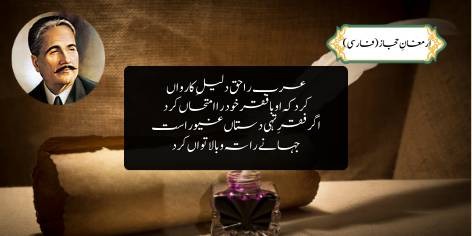
عرب را حق دلیلِ کارواں
کرد کہ او با فقر خود را امتحاں کرد
اگر فقرِ تہی دستاں غیور است
جہانے را تہ و بالا تواں کرد
Arab ra Haq daleel-e-karwan
kard Ke oo ba faqr khud ra imtihan kard
Agar faqr-e-tuhi dastan ghayoor ast
Jahan-e-ra tah-o-bala tawan kard
Allah made the Arabs the leaders of the caravan because they tested their inner strength through the trials of simple, spiritual poverty (Faqr). If the poverty of those with empty hands is coupled with self-respect and honor, it has the power to turn the entire world upside down.
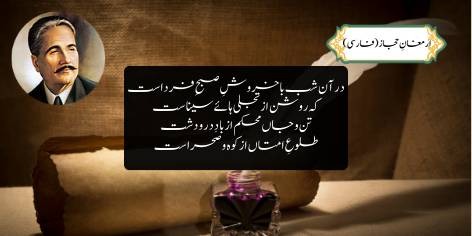
در آن شب با خروشِ صبحِ فرداست
کہ روشن از تجلی ہائے سینا ست
تن و جاں محکم از بادِ در و دشت
طلوعِ امتاں از کوہ و صحرا ست
Dar aan shab ba khrosh-e-subh-e-fardast
Ke roshan az tajalli haye Sina-st
Tan-o-jan muhkam az baad-e-dar-o-dasht
Tulu-e-umtan az koh-o-sahra ast
In the silence of the desert night, there is the roar of a coming tomorrow, for that land is illuminated by the same Divine lights that shone on Mount Sinai. The body and soul are made strong and resilient by the winds of the plains and deserts; indeed, the rise of great nations always begins from the rugged mountains and the vast wilderness.
Full Explanation in Urdu and Roman Urdu
Urdu
صبح کے وقت جب صحرا اور اس کے راستے سورج کی روشنی سے منور ہو گئے تو کھجور کے درخت کی ایک شاخ پر بیٹھے پرندے نے پکار کر کہا کہ اے صحرا کے بیٹے! اب اپنا خیمہ اکھاڑ لے اور کوچ کر، کیونکہ زندگی کا اصل لطف تو مسلسل سفر اور حرکت میں ہے، سکون میں موت چھپی ہے۔
Roman Urdu
Subh ke waqt jab sahra aur uske raste sooraj ki roshni se munawar ho gaye to khajoor ke darakht ki ek shakh par baithe parinday ne pukaar kar kaha ke ai sahra ke bete! Ab apna khaima ukhaar le aur kooch kar, kyunke zindagi ka asal lutf to musalsal safar aur harkat mein hai, sukoon mein maut chhupi hai.
Urdu
اللہ تعالیٰ نے اہل عرب کو انسانیت کے قافلے کی رہنمائی کے لیے منتخب کیا کیونکہ انہوں نے فقر اور سختیوں میں خود کو آزما کر کندن بنایا تھا۔ اگر غریب اور بظاہر خالی ہاتھ نظر آنے والے لوگوں میں غیرت اور خودداری والا فقر پیدا ہو جائے تو وہ اپنی روحانی طاقت سے پوری دنیا کے نظام کو بدل کر رکھ سکتے ہیں۔
Roman Urdu
Allah Ta’ala ne ahl-e-Arab ko insaniyat ke qafle ki rehnumai ke liye muntakhab kiya kyunke unhon ne faqr aur sakhtiyon mein khud ko aazma kar kundan banaya tha. Agar ghareeb aur bazahir khali hath nazar aane wale logon mein ghairat aur khuddari wala faqr paida ho jaye to wo apni ruhani taqat se poori duniya ke nizam ko badal kar rakh sakte hain.
Urdu
وہاں کی خاموش راتوں میں آنے والے کل کا جوش و خروش پوشیدہ ہے کیونکہ وہ سرزمین تجلیاتِ الٰہی سے روشن ہے۔ صحرا کی ہواؤں اور پہاڑوں کی سختیوں سے انسان کا جسم اور روح دونوں فولاد کی طرح مضبوط ہو جاتے ہیں۔ تاریخ گواہ ہے کہ عظیم اور زندہ قومیں ہمیشہ پہاڑوں اور صحراؤں کی آغوش سے ہی جنم لیتی ہیں نہ کہ محلوں کی آسائشوں سے۔
Roman Urdu
Wahan ki khamosh raaton mein aane wale kal ka josh-o-khurosh poshida hai kyunke wo sarzameen tajalliyat-e-ilahi se roshan hai. Sahra ki hawaon aur paharon ki sakhtiyon se insan ka jism aur rooh dono faulad ki tarah mazboot ho jate hain. Tareekh gawah hai ke azeem aur zinda qoumein hamesha paharon aur sahraon ki aaghosh se hi janam leti hain na ke mahalon ki aasayishon say.