Dil-e-Nadan Tujhe Hua Kya Hai by Mirza Ghalib: Full Ghazal in Urdu, Roman Urdu, and English
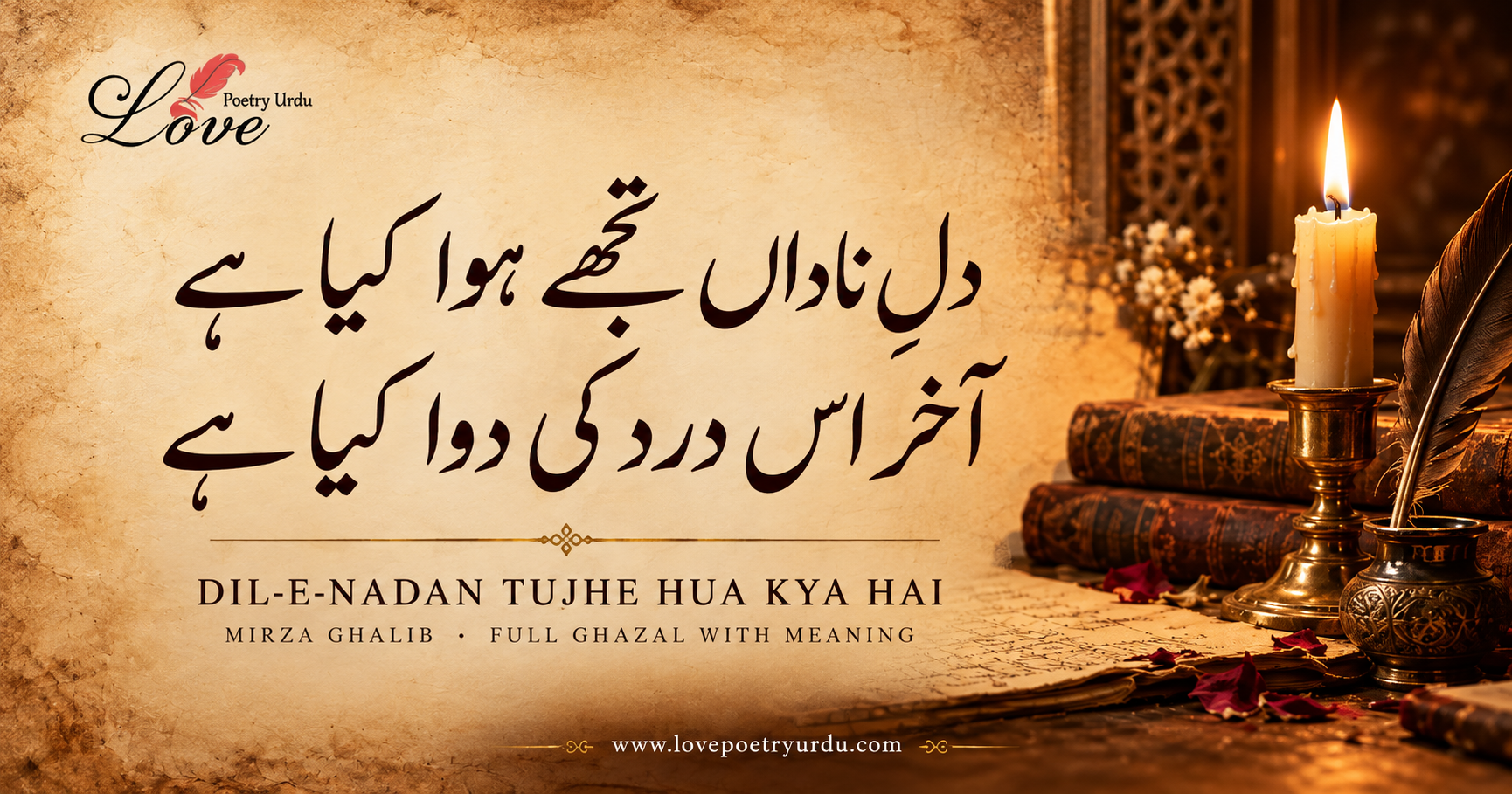
Dil-e-Nadan Tujhe Hua Kya Hai is one of Mirza Ghalib’s most loved ghazals, in which he addresses his own naive heart and asks what has happened to it, then asks akhir is dard ki dawa kya hai—what cure this pain has. For readers of Urdu poetry, Ghalib admirers, students, and anyone drawn to classical ghazals, this page gives the full text in Urdu, Roman Urdu, and English, with all eleven shers in the Diwan order and the meaning of each explained. It also looks at key words and the larger themes of love, longing, and existential questioning that make the poem so enduring. Copy any sher for a status or a message. Many pages mix in couplets from other ghazals, so this one stands complete.
About the Ghazal “Dil-e-Nadan Tujhe Hua Kya Hai”
Mirza Ghalib lived from 1797 to 1869 and wrote in both Urdu and Persian. This ghazal sits in his Urdu Diwan, and its radif, the phrase repeated at the close of every sher, is “kya hai”. That one choice shapes the whole poem, because all eleven shers end as questions.
The matla, meaning the opening sher, is the line most readers know by heart. Ghalib speaks to his own heart as though it were a foolish friend who has done something reckless.
He does not scold it. He asks what happened, then asks what medicine could treat the condition, and the heart gives him no answer.
Shers four to seven read almost like one continuous thought. Ghalib moves outward from his own heart and questions God, the beauty of the people around him, and the grass, flowers, cloud and wind. This Mirza Ghalib biography covers his life and his place in Urdu poetry. If you enjoy this one, read Ghalib’s Hazaaron Khwahishen Aisi next.
All eleven shers appear below in the order of the printed Diwan.
Sher 1: Dil-e-Nadan Tujhe Hua Kya Hai
Urdu
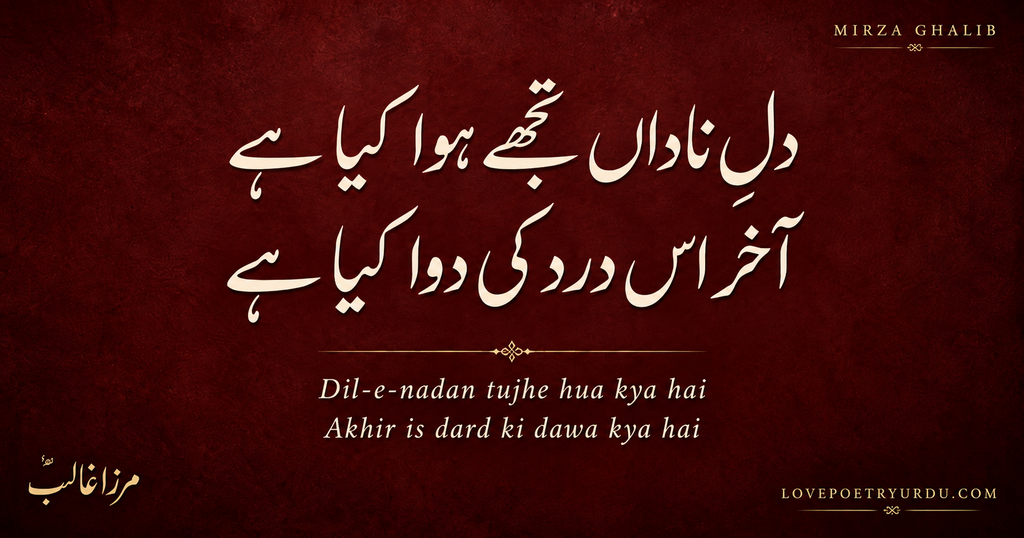
دلِ ناداں تجھے ہوا کیا ہے
آخر اس درد کی دوا کیا ہے
Roman Urdu
Dil-e-nadan tujhe hua kya hai
Akhir is dard ki dawa kya hai
English
Foolish heart, what has happened to you?
What, after all, is the cure for this pain?
Sher 2: Hum Hain Mushtaq Aur Woh Bezaar
Urdu
ہم ہیں مشتاق اور وہ بے زار
یا الٰہی یہ ماجرا کیا ہے
Roman Urdu
Hum hain mushtaq aur woh bezaar
Ya Ilahi ye majra kya hai
English
I am full of longing and she wants none of it.
O God, what sort of affair is this?
Sher 3: Main Bhi Munh Mein Zaban Rakhta Hoon
Urdu
میں بھی منہ میں زبان رکھتا ہوں
کاش پوچھو کہ مدّعا کیا ہے
Roman Urdu
Main bhi munh mein zaban rakhta hoon
Kaash poocho ke mudda’a kya hai
English
I also have a tongue in my mouth.
If only you would ask me what I want.
Sher 4: Jab Ke Tujh Bin Nahin Koi Maujood
Urdu
جب کہ تجھ بن نہیں کوئی موجود
پھر یہ ہنگامہ اے خدا کیا ہے
Roman Urdu
Jab ke tujh bin nahin koi maujood
Phir ye hangama ae Khuda kya hai
English
When nothing exists except you,
then what is all this commotion, O God?
Sher 5: Ye Pari-Chehra Log Kaise Hain
Urdu
یہ پری چہرہ لوگ کیسے ہیں
غمزہ و عشوہ و ادا کیا ہے
Roman Urdu
Ye pari-chehra log kaise hain
Ghamza-o-ishwa-o-ada kya hai
English
What manner of people are these, with faces like fairies?
What are these glances, this coyness, this grace?
Sher 6: Shikan-e-Zulf-e-Ambareen Kyun Hai
Urdu
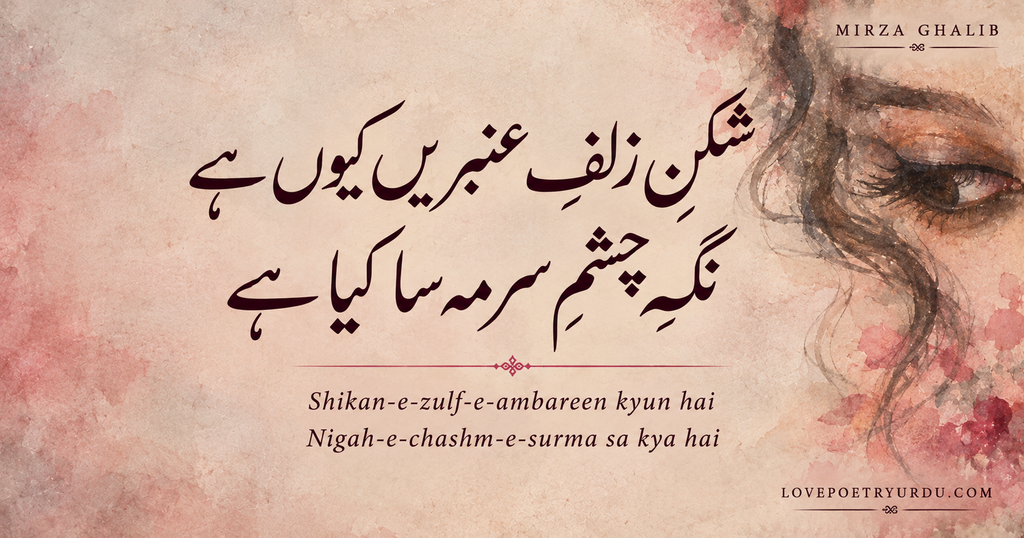
شکنِ زلفِ عنبریں کیوں ہے
نگۂ چشمِ سرمہ سا کیا ہے
Roman Urdu
Shikan-e-zulf-e-ambareen kyun hai
Nigah-e-chashm-e-surma sa kya hai
English
Why does the perfumed curl lie twisted so?
What is this look from an eye darkened with kohl?
Sher 7: Sabza-o-Gul Kahan Se Aaye Hain
Urdu
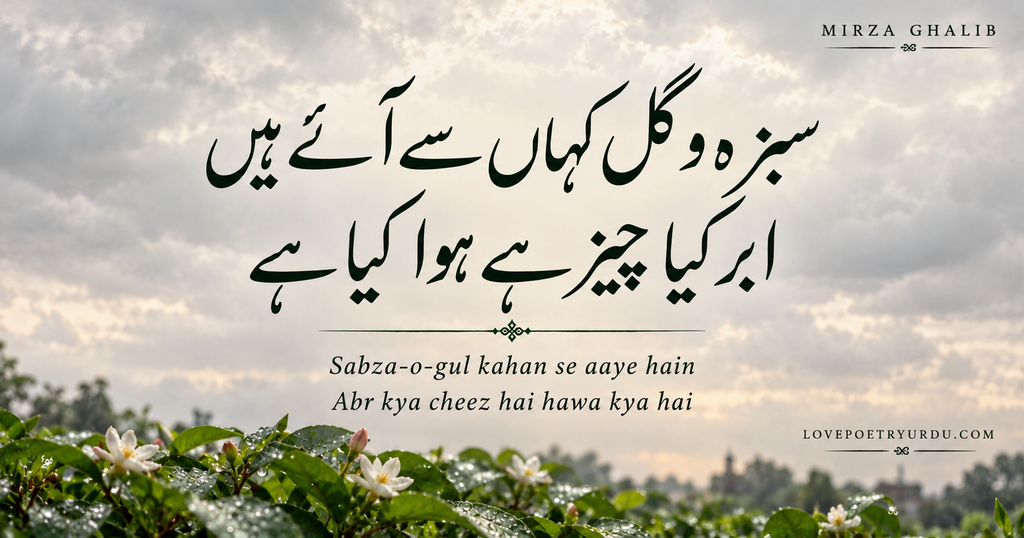
سبزہ و گل کہاں سے آئے ہیں
ابر کیا چیز ہے ہوا کیا ہے
Roman Urdu
Sabza-o-gul kahan se aaye hain
Abr kya cheez hai hawa kya hai
English
Where have the green grass and the flowers come from?
What thing is the cloud, and what is the wind?
Sher 8: Hum Ko Un Se Wafa Ki Hai Ummeed
Urdu
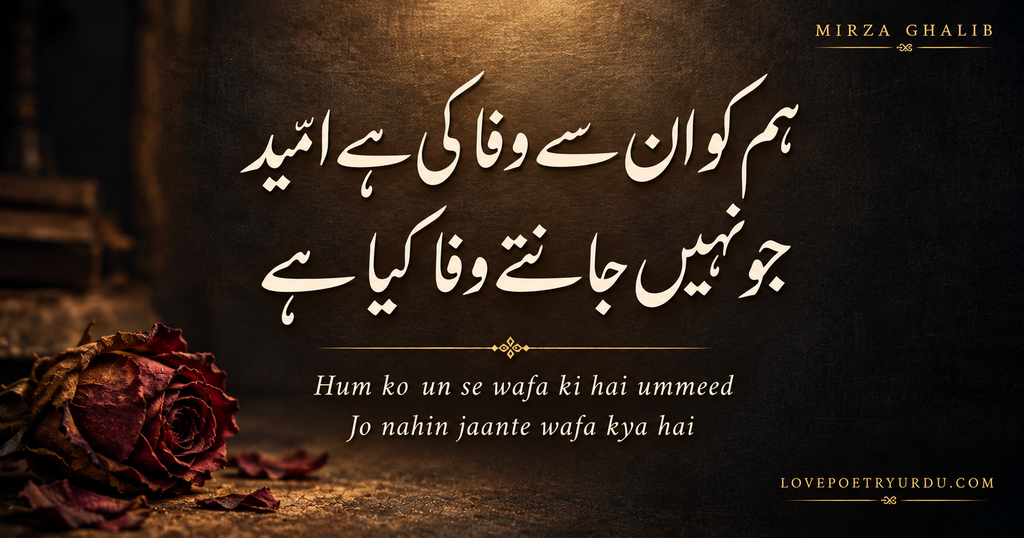
ہم کو ان سے وفا کی ہے امّید
جو نہیں جانتے وفا کیا ہے
Roman Urdu
Hum ko un se wafa ki hai ummeed
Jo nahin jaante wafa kya hai
English
I hope for loyalty from the one
who does not even know what loyalty is.
Sher 9: Haan Bhala Kar Tera Bhala Hoga
Urdu
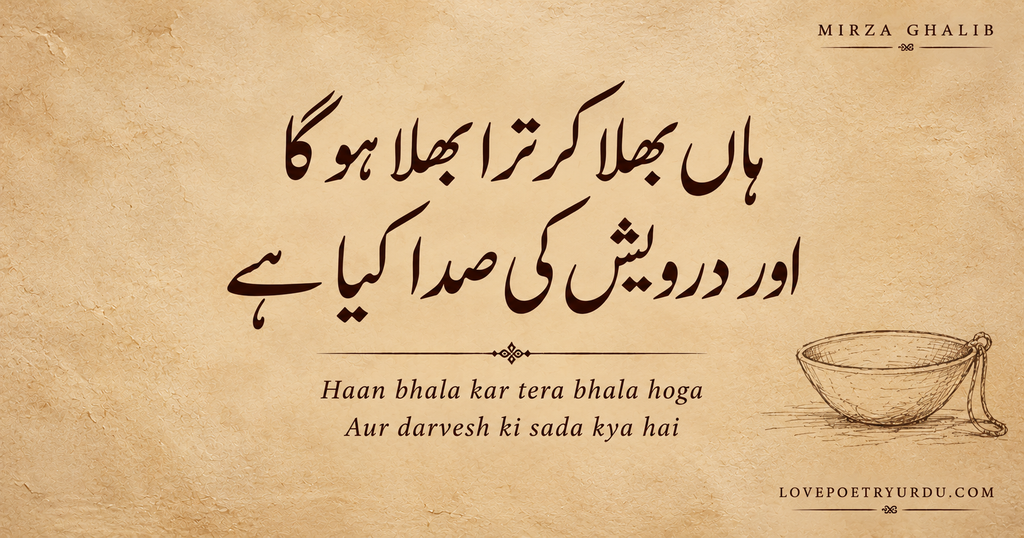
ہاں بھلا کر ترا بھلا ہوگا
اور درویش کی صدا کیا ہے
Roman Urdu
Haan bhala kar tera bhala hoga
Aur darvesh ki sada kya hai
English
Yes, do good and good will come to you.
What else does a darvesh ever call out?
Sher 10: Jaan Tum Par Nisaar Karta Hoon
Urdu
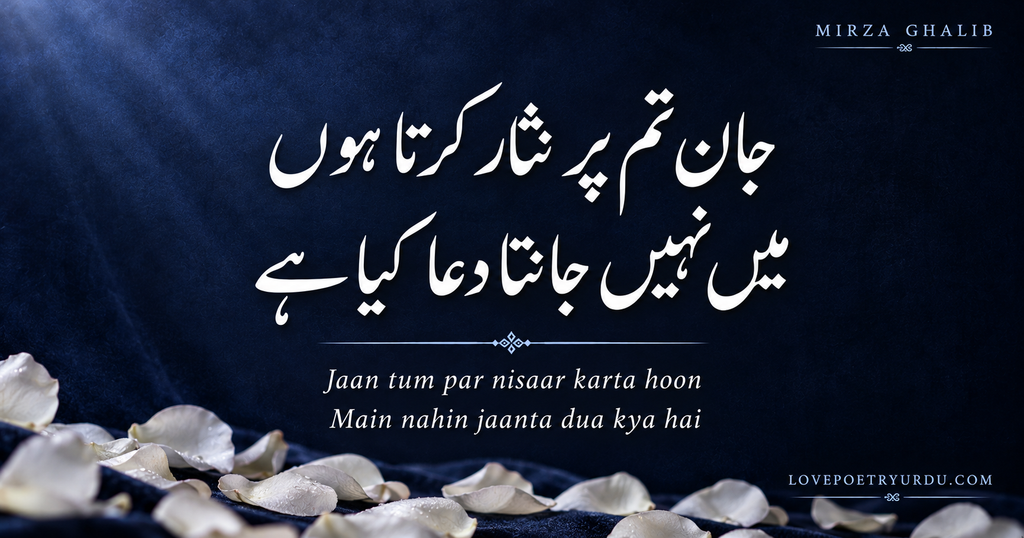
جان تم پر نثار کرتا ہوں
میں نہیں جانتا دعا کیا ہے
Roman Urdu
Jaan tum par nisaar karta hoon
Main nahin jaanta dua kya hai
English
I offer up my life for you.
I do not know what a prayer is.
Sher 11: Maine Mana Ke Kuch Nahin Ghalib
Urdu
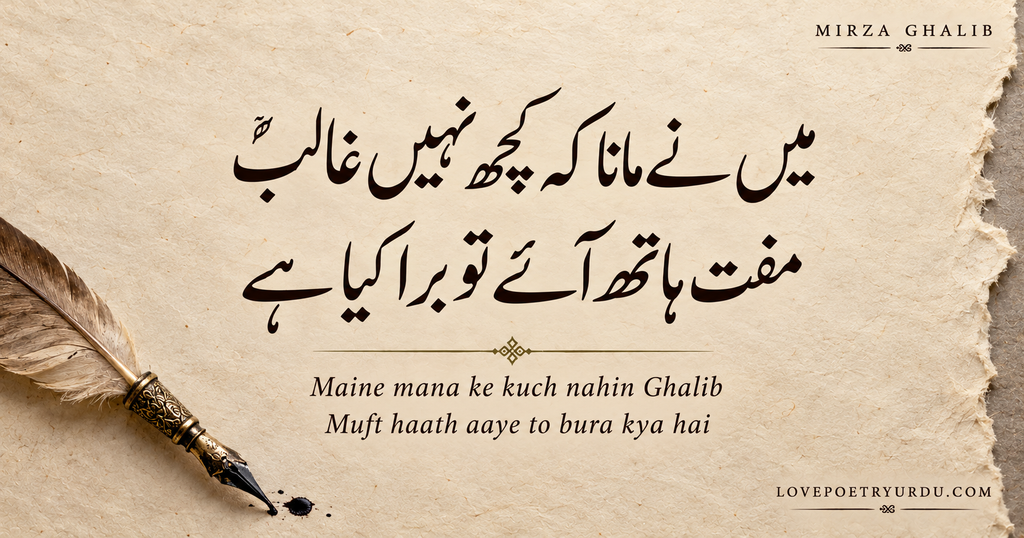
میں نے مانا کہ کچھ نہیں غالبؔ
مفت ہاتھ آئے تو برا کیا ہے
Roman Urdu
Maine mana ke kuch nahin Ghalib
Muft haath aaye to bura kya hai
English
I grant you that Ghalib is worth nothing.
But if he comes free of charge, what harm is there?
What the Ghazal Means
The ghazal sets reason against desire and never settles the argument. Ghalib addresses his own heart with bewilderment rather than authority, and that emotional vulnerability is why readers hear their own voice in the matla.
The phrase “dil-e-nadan tujhe hua kya hai” translates literally as “O my naive heart, what has happened to you?”, where “tujhe hua kya hai” means “what has happened to you” and “dil-e-nadan” means the naive or innocent heart.
Across eleven shers, the poem moves through love, longing, and a wide existential wonder. Readers celebrate it for the way personal emotion and philosophical inquiry sit inside the same two lines, and for the way Ghalib’s questions about his own suffering widen into questions about the nature of suffering and existence.
His poetry carries that complexity of human emotion throughout the Diwan, and this ghazal shows it as plainly as anything he wrote.
Here is what the most quoted shers say in plain words.
- The matla, Sher 1: A meditation on emotional conflict and self-questioning. Ghalib treats his heart as a patient, asks what illness it has caught and what medicine would work, and the fact that he has to ask already tells the reader no medicine exists.
- Sher 2: The whole imbalance of love sits in two words. “Mushtaq” means eager and full of longing, while “bezaar” means weary and wanting nothing to do with the matter. He is the first, she is the second, and he can only ask God how such a pairing came about.
- Shers 4 to 7: These four verses read almost like one continuous thought. If nothing exists except God, then what is all this noise? Where do fairy-faced people come from, and why do they carry such glances and gestures? Why does the perfumed curl twist that way? Where did the grass, the flowers, the cloud and the wind come from? Many readers take this as Ghalib asking why a single reality shows itself in so many beautiful and distracting forms. Sher 6 is the one that stays with people, and anyone drawn to that image will find more of it in Ghalib’s poetry on eyes.
- Sher 8, hum ko un se wafa ki hai ummeed: This is the most quoted line of the ghazal and the one people still send to each other after a heartbreak. Ghalib hopes for loyalty from someone who does not even understand what loyalty is. The sting does not come from cruelty, because the beloved shows none.
- Sher 10: The lover offers his life, yet says he does not know how to pray. His devotion is complete, but it belongs to love rather than to formal worship.
- The maqta, Sher 11: Ghalib closes by agreeing with his critics. He grants that he is worth nothing, then asks where the harm lies if someone gets him for free. The joke does real work, because he has spent ten shers asking unanswerable questions and ends by pricing himself at zero while still recommending the purchase.
Key Words in This Ghazal
A few Persian and Arabic words in this ghazal carry most of the weight in their lines. Learning them once makes the whole poem open up, and they return in Ghalib’s other ghazals as well.
- Nadan: foolish or innocent, someone who does not know better.
- Dawa: medicine, cure, remedy.
- Mushtaq: eager, longing, keen for someone.
- Bezaar: weary, fed up, wanting nothing to do with something.
- Majra: an affair or incident, the whole business of what is going on.
- Mudda’a: the point, the claim, what a person actually wants.
- Hangama: commotion, uproar, a loud and crowded disturbance.
- Pari-chehra: fairy-faced, a face beautiful enough to belong to a pari.
- Ghamza: a sidelong glance, the kind thrown on purpose.
- Ishwa: coquetry, a charming pretence of refusal.
- Ada: grace or style, the particular way a person carries themselves.
- Surma: kohl, the black powder lined along the eyelid.
- Nisaar: scattered or offered up, the word a poet picks when someone gives everything away.
- Darvesh: a wandering holy man who lives on what people give him.
Why This Ghazal Is Still Loved in Pakistan
Noor Jehan sang this ghazal in the 1961 Pakistani film “Ghalib”, a biographical picture about the poet directed by Atta Ullah Hashmi, but the better-known recorded song version dates to 1950. Her recording carried the lines to listeners who had never opened a Diwan, and many people still hear her voice in their head when they read the opening sher.
Singers and composers across the subcontinent have returned to these lines for decades, which is how the ghazal spread so widely through South Asian music and popular culture. It also appears on the album The Golden Collection Suraiya. The verse itself stays in Ghalib’s Urdu, written long before any movie reached it.
The ghazal holds its place for reasons that reach past the film. It remains one of Ghalib’s few famous ghazals that needs no glossary on a first reading.
- The words are everyday words: Dard, dawa, wafa. A reader with no training in Urdu poetry follows the first sher completely.
- Every sher ends in a question: The radif “kya hai” turns the poem into something asked rather than announced, which is why single shers work so well as captions.
- The wafa line fits modern heartbreak: Hoping for loyalty from someone who does not understand it describes a great deal of what people write about today.
- The maqta carries humour: Ghalib calls himself worthless and then recommends himself anyway, and that self-aware joke still lands.
The version most listeners know was sung in a classic Suraiya-Talat Aziz style, and its duration in memory owes more to feeling than to timing.
Readers who enjoy this register will find a great deal more in our collection of romantic Urdu poetry.
Conclusion
Dil e Nadan Tujhe Hua Kya Hai holds eleven shers and one idea: a heart asking questions nobody can answer. Ghalib asks what happened to it, asks akhir is dard ki dawa kya hai, asks God why the world turned so loud, and ends by making a joke at his own expense. The ghazal supplies no answer, and readers keep returning to it for exactly that reason. For many, hum ko un se wafa ki hai ummeed says in one sher what a long conversation cannot.
More of his work, including the ghazals that sit beside this one in the Diwan, waits on our Mirza Ghalib poetry page.
Frequently Asked Questions
Who wrote Dil-e-Nadan Tujhe Hua Kya Hai?
Mirza Ghalib wrote this ghazal. Ghalib lived from 1797 to 1869, and the ghazal appears in his Urdu Diwan.
What does “Dil-e-Nadan” mean?
“Dil-e-Nadan” means “foolish heart” or “naive heart”. The “-e-” is the Persian izafat, which links two words, so “dil-e-nadan” reads as “heart that is naive”.
How many shers are in this ghazal?
The ghazal has eleven shers in Ghalib’s Diwan, from the matla (opening sher) to the maqta (closing sher, where Ghalib names himself).
Who sang Dil-e-Nadan Tujhe Hua Kya Hai?
Talat Mahmood and Suraiya sang it as a duet in the 1954 Indian film “Mirza Ghalib”. In Pakistan, Noor Jehan sang it in the 1961 film “Ghalib”.
What does “Hum ko un se wafa ki hai ummeed” mean?
It means “I hope for loyalty from the one who does not even know what loyalty is.” The sher describes expecting faithfulness from someone who does not understand it.
Which film is Dil-e-Nadan Tujhe Hua Kya Hai from?
The ghazal appears in two films. Suraiya and Talat Mahmood sang it for the Hindi film “Mirza Ghalib” in 1954, with music by Ghulam Mohammed. Noor Jehan sang it for the Pakistani film “Ghalib” in 1961. Ghalib wrote the words themselves in Urdu, long before either film.